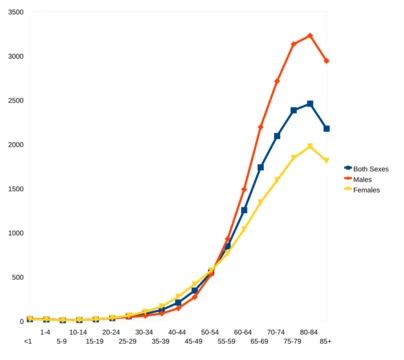
Camptocormia
A spinal bending condition with neurological and muscular origins.

Sardaka · CC BY-SA 4.0
Camptocormia, also known as bent spine syndrome (BSS), is a symptom of a multitude of diseases most commonly seen in the elderly. It is identified by an abnormal thoracolumbar spinal flexion of at least 45 degrees anteriorly when standing, which differentiates it from kyphosis. The condition was first clinically studied around the time of the First World War and was originally believed to be a psychogenic conversion disorder resulting from war trauma.
- field
- Medicine
- known_for
- Abnormal forward bending of the spine (bent spine syndrome)
- etymology
- From Greek 'kamptō' (to bend) and 'kormos' (trunk)
- coined_by
- Alexandre-Achille Souques and B. Rosanoff-Saloff
- average_age_of_onset
- 66 years
- common_in
- Men
Lore & Background
Camptocormia was first clinically studied around the time of the First World War, when it was believed to be a psychogenic conversion disorder resulting from the severe trauma of war. Alexandre-Achille Souques and B. Rosanoff-Saloff coined the term from Greek words meaning 'to bend' and 'trunk,' and they also created the widely accepted definition. Souques and others treated patients with psychological therapy and early versions of electrotherapy, and Samuel A. Sandler used a similar approach during the Second World War. This view of BSS as a conversion disorder led to a lack of awareness and few diagnoses by physicians.
Reader's Guide
Camptocormia, or bent spine syndrome, is significant as a symptom of many underlying diseases, with two common origins: neurological and muscular. The condition is characterized by an anterior flexion of the lower back greater than 45 degrees when standing, which worsens while walking but disappears when lying down. This alleviation indicates it is a manifestation of another disease, not a permanently bent spine. The condition is most common in the elderly, with an average age of onset of 66 years, and is more frequent in men. It often appears in individuals with Parkinson's disease, muscular dystrophies, endocrine disorders, inflammatory conditions, or mitochondrial myopathies. Diagnosis requires a bending angle greater than 45 degrees and may involve CT scans, MRIs, electromyography, or muscle biopsies. Treatment focuses on alleviating the underlying cause through therapeutic measures or lifestyle changes, though there is no specific pharmacological treatment for primary BSS. The condition can lead to pain, breathing difficulties, muscle weakness, and arthritis.
Did You Know?
- Camptocormia comes from Greek words meaning 'to bend' and 'trunk.'
- The condition was originally believed to be a psychogenic conversion disorder from war trauma.
- The abnormal bending becomes worse while walking but disappears when lying down.
- Studies estimate the prevalence of BSS in people with Parkinson's disease is between 3% and 18%.
Origins in Misunderstanding: A Century of Misdiagnosis
The term camptocormia draws from two ancient Greek roots — kamptō, meaning "to bend," and kormos, meaning "trunk" — and was formally coined by Alexandre-Achille Souques and B. Rosanoff-Saloff, who also established the clinical definition still widely referenced today. The condition first attracted serious medical attention around the First World War, when physicians observed the characteristic forward stoop in soldiers and attributed it to psychological trauma. Under that assumption, Souques and his colleagues prescribed psychological therapy and rudimentary electrotherapy. Samuel A. Sandler replicated a comparable treatment protocol for servicemen during the Second World War. This entrenched belief that the stooping was a conversion disorder kept the syndrome largely invisible to the broader medical community for decades, resulting in remarkably few diagnoses. It was only as neuroscience and physiology advanced that researchers identified genuine biological mechanisms behind the abnormal flexion. In recognition of the stigma attached to the original psychological framing, the medical community now favors the neutral label "bent spine syndrome," deliberately distancing the condition from its troubled diagnostic past.
Two Roads to the Stoop: Muscular and Neurological Pathways
Camptocormia does not spring from a single root cause; rather, it typically emerges through either a muscular or a neurological pathway, and the wide array of underlying pathologies means no single etiology dominates. On the muscular side, the condition can appear as a primary, idiopathic late-onset myopathy in which progressive weakness targets the spinal extensor muscles — a pattern more prevalent in women. The underlying tissue changes involve fibrosis, fatty infiltration, and mitochondrial deterioration tied to aging, particularly affecting the paravertebral muscles that govern walking stance and gait. Alternatively, secondary muscular BSS may accompany muscular dystrophies, neuromuscular disorders, inflammatory myopathies, metabolic or endocrine disturbances, and mitochondrial myopathies. The neurological route often traces back to dysfunction in the extensor spinal muscles driven by motor neuron disease, central nervous system disorders, or early-stage amyotrophic lateral sclerosis. Damage to the basal ganglia nuclei within the cerebral cortex can disrupt the flexion-extension balance needed for upright posture, and abnormally low dopamine levels — as seen in Parkinson's disease — further impair these circuits. Studies place the prevalence of BSS among Parkinson's patients at roughly three to eighteen percent.
The 45-Degree Tell: Recognizing the Syndrome in the Body
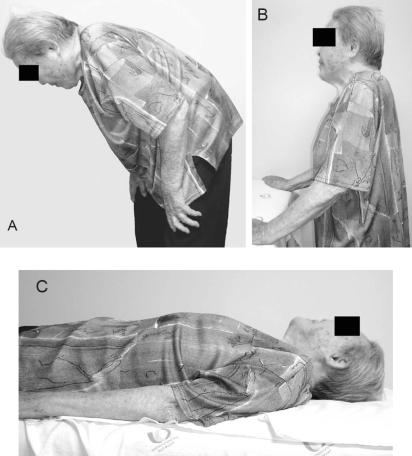
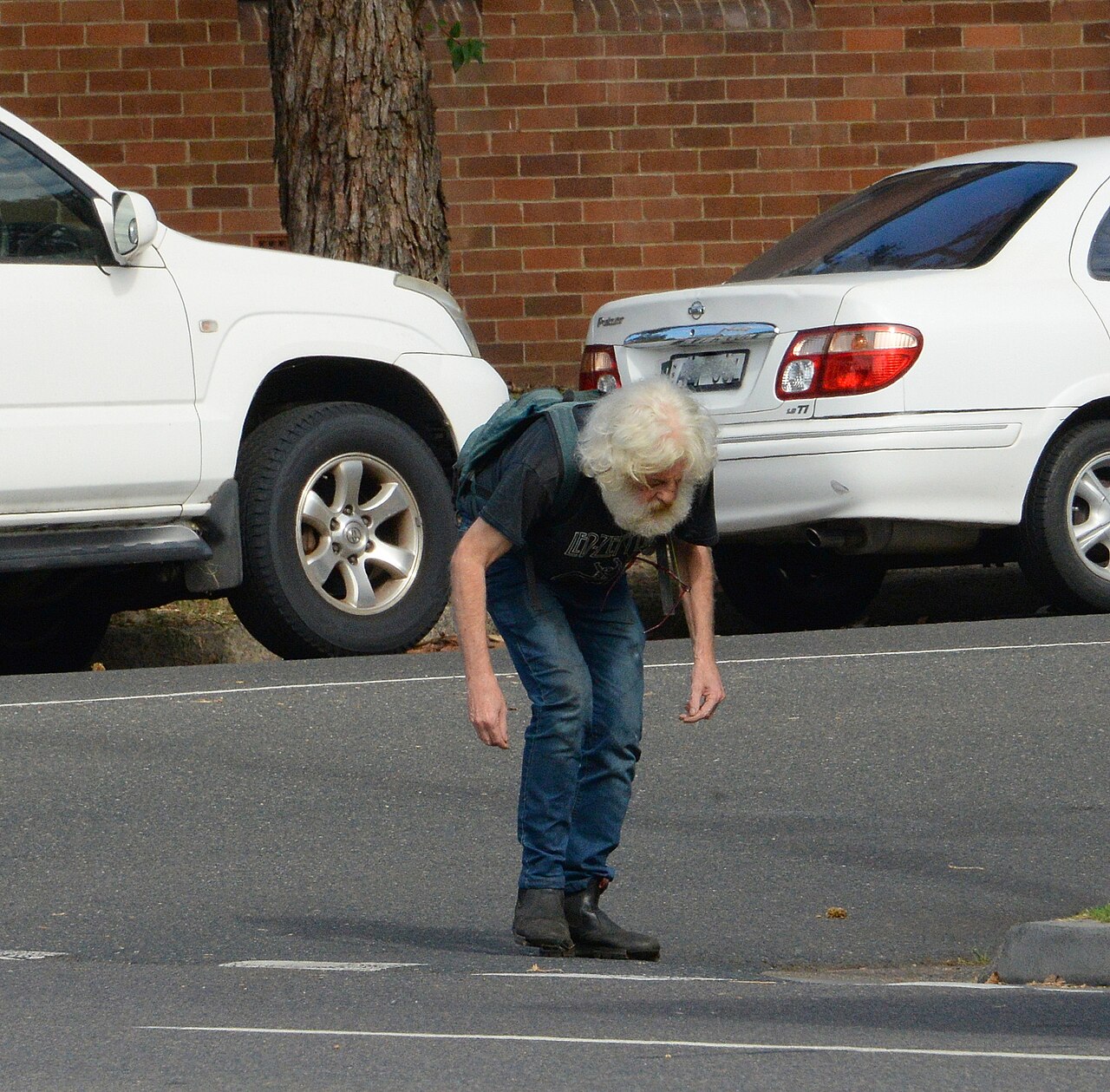
The hallmark of camptocormia is a pronounced forward bend of the torso that becomes more severe during walking yet vanishes entirely when the patient lies flat. This positional relief is diagnostically crucial: it signals that the spine itself is not structurally deformed but that the postural muscles are failing to hold the trunk upright. Ironically, the condition's current medical name — bent spine syndrome — suggests a skeletal abnormality that is not actually present. For a clinician to classify the presentation as BSS, the anterior thoracolumbar flexion must exceed forty-five degrees, a threshold that distinguishes it from the related condition of kyphosis. Affected individuals generally cannot achieve a fully erect posture and frequently report low back pain as a secondary complaint. The syndrome shows a demographic skew toward men and carries an average onset around sixty-six years of age, though it is not exclusive to older adults. It commonly co-occurs with Parkinson's disease, various muscular dystrophies, endocrine disorders, inflammatory myositis, and mitochondrial myopathies, making it a visible flag for a broader underlying illness.
From CT Scans to Gene Targets: Diagnosis and the Road Ahead
Confirming that a patient's stoop meets the BSS threshold is straightforward; identifying the root cause is far more challenging. Clinicians must first exclude mimics such as vertebral fractures, pre-existing spinal conditions, and ankylosing spondylitis before attributing the flexion to the syndrome. Lower-back CT scans and magnetic resonance imaging are the standard tools for visualizing the muscular or structural origin of the bending. Beyond imaging, genetic research has uncovered specific mutations in camptocormia patients, including variants in the RYR1 gene linked to axial myopathy, the DMPK gene associated with myotonic dystrophy, and genes connected to dysferlinopathy and Parkinson's disease. These discoveries open a promising avenue: each identified gene mutation could serve as a target for future gene-therapy interventions aimed at correcting the underlying defect rather than merely managing symptoms. For now, clinical management centers on treating the condition that drives the bending — whether through therapeutic measures or lifestyle adjustments — but the genetic map is steadily expanding the toolkit available to physicians.
Gallery
Frequently Asked Questions
What is Camptocormia?
Camptocormia, often called bent spine syndrome, is a postural condition in which the thoracolumbar spine flexes forward by at least 45 degrees while the person is standing upright. It is not a single disease in itself but rather a visible symptom that can accompany a wide range of underlying disorders, most frequently appearing in older adults.
How does Camptocormia differ from kyphosis?
The key distinction is that camptocormia involves a dynamic, at least 45-degree anterior bend of the thoracolumbar region that is present when standing, whereas kyphosis refers to a more fixed structural curvature of the spine. In practice, camptocormia signals an active muscular or neurological problem rather than a bony deformity.
Who coined the term and when was the condition first studied?
The name was created by Alexandre-Achille Souques and B. Rosanoff-Saloff, drawing on the Greek words 'kamptō' (to bend) and 'kormos' (trunk). Clinical investigation of the condition dates back to roughly the era of the First World War, when physicians initially mistook it for a psychogenic conversion disorder linked to combat trauma.
What is the underlying mechanism behind Camptocormia?
The condition stems from a combination of neurological impairment and muscular weakness, particularly in the trunk and paraspinal muscles, which fails to maintain an upright posture against gravity. Because multiple distinct diseases can produce the same forward-bending presentation, identifying the root cause requires ruling out various systemic, metabolic, and neuromuscular conditions.
Who is most likely to develop Camptocormia?
The average age at onset sits around 66 years, placing it squarely in the elderly population, and it occurs more frequently in men than in women. Its prevalence among older adults is one reason it is catalogued as an aging-associated condition in medical references.
More in Aging-associated diseases 1-24
Spotted an error? Know more?
This is a living reference — every entry is fact-audited, and reader corrections feed straight into our audit queue. Suggest an edit · See this site's audit record