Glioblastoma
Aggressive brain cancer with poor prognosis and rapid progression.

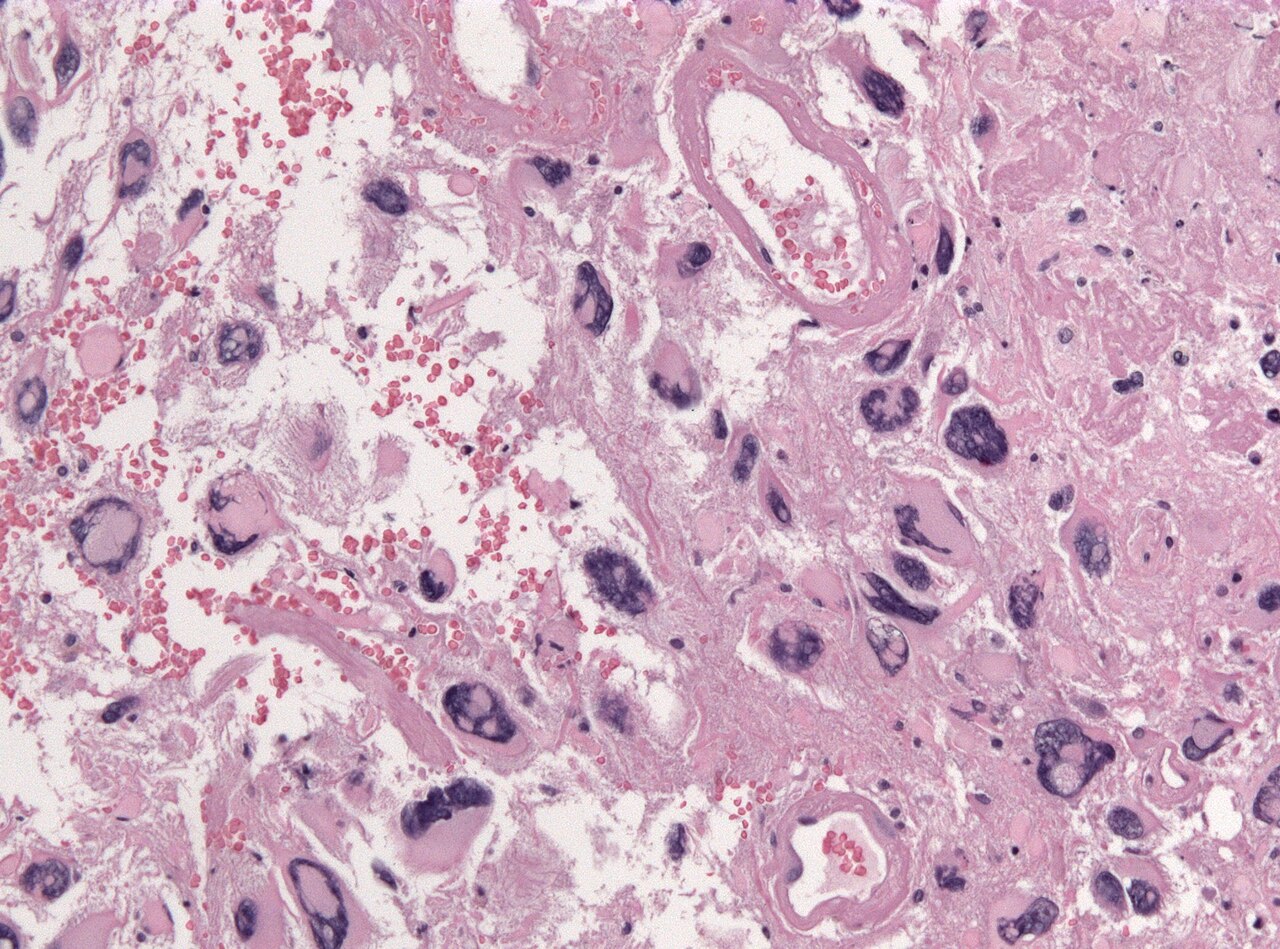
Jensflorian · CC BY-SA 3.0
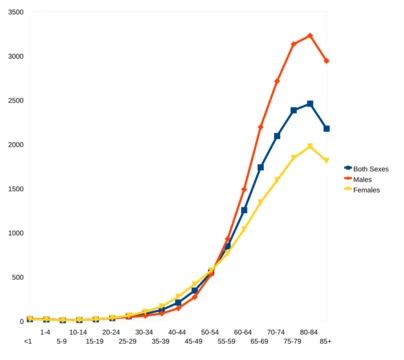
Glioblastoma, once called glioblastoma multiforme (GBM), is the most aggressive and frequently occurring cancer that starts in the brain, and it carries a very grim outlook. It accounts for 15% of all brain tumors and is the most common cancer originating within the brain, though it is the second most common brain tumor overall, behind the usually benign meningioma. Even with the most intensive treatment, the tumor nearly always returns. The average survival time after diagnosis is 10 to 13 months, and only about 5 to 10% of patients live longer than five years. Without any treatment, survival is typically around three months. The disease affects roughly 3 out of every 100,000 people each year, and about 1 in 170 people will develop some form of brain cancer in their lifetime. The average age at diagnosis is 64.
Initial signs are vague and can include headaches, personality shifts, nausea, and stroke-like symptoms. These often worsen quickly and may lead to unconsciousness. More specific symptoms—such as seizures, memory loss, mood or concentration changes, and localized neurological problems—depend more on where the tumor sits in the brain than on its biological nature. The tumor can cause symptoms rapidly, but sometimes it grows to a large size without producing any signs at all.
The cause of most glioblastomas is unknown. The best-known risk factor is exposure to high-dose ionizing radiation, such as from prior radiation therapy. About 5% of cases stem from inherited conditions like neurofibromatosis, Li–Fraumeni syndrome, tuberous sclerosis, or Turcot syndrome. Previous radiation therapy also raises risk. For unclear reasons, the disease is more common in males. Other possible environmental links include smoking, pesticides, and work in petroleum refining or rubber manufacturing. Certain viruses—SV40, HHV-6, and cytomegalovirus (CMV)—have been associated with glioblastoma, but the role of CMV remains controversial and unproven, and it is not considered necessary for tumor development by mainstream oncology. Studies have looked at cured meat consumption, formaldehyde exposure, and electromagnetic fields from cell phones or home wiring, but as of 2003 and 2015 respectively, none had been confirmed as risk factors.
The cellular origin of glioblastoma is not settled. It has long been thought to arise from glial-type stem cells in the subventricular zone,
- field
- Oncology, Neuropathology
- known_for
- Most aggressive and most common brain-originating cancer; poor prognosis; classified by IDH mutation status
- incidence
- About 3 in 100,000 people per year
- average_age_at_diagnosis
- 64
- survival_with_treatment
- 10–13 months typical
- survival_without_treatment
- 3 months typical
Lore & Background
Glioblastoma is thought to arise from astrocytes, though more recent studies suggest astrocytes, oligodendrocyte progenitor cells, and neural stem cells could all serve as the cell of origin. The cause of most cases is unknown; uncommon risk factors include genetic disorders such as neurofibromatosis and Li–Fraumeni syndrome, and previous radiation therapy. The best-known risk factor is exposure to high-dose ionizing radiation, such as from prior radiation therapy, while the risk from diagnostic CT scans is considered very low and not a major causative factor. About 5% of cases develop from certain hereditary syndromes. Other associations include exposure to smoking, pesticides, and working in petroleum refining or rubber manufacturing. Glioblastoma has been associated with the viruses SV40, HHV-6, and cytomegalovirus (CMV), but the role of CMV remains controversial and unproven, and it is not considered necessary for tumor development.
Reader's Guide
Glioblastoma represents a significant challenge in oncology due to its aggressive nature and high recurrence rate. The diagnosis typically is made by a combination of CT scan, MRI scan, and tissue biopsy. Treatment usually involves surgery, followed by chemotherapy and/or radiation; the medication temozolomide is generally advised as part of chemotherapy. However, clinical trial participation, if available, is preferred by current NCCN guidelines. High-dose steroids may be used to help reduce swelling and decrease symptoms. Surgical removal of the tumor is linked to increased survival, but only by some months. The 2021 WHO Classification eliminated the classification of secondary glioblastoma; only tumors that are IDH wild type are now classified as glioblastoma. Molecular subtypes—classical, proneural, and mesenchymal—have been identified based on gene expression. Methylation of the MGMT gene promoter is associated with an improved response to treatment with DNA-damaging chemotherapeutics such as temozolomide. The presence of glioblastoma cancer stem cells, coupled with the tumor's diffuse nature, is believed to be the possible cause behind resistance to conventional treatments and the high recurrence rate.
Did You Know?
- Glioblastoma represents 15% of all brain tumors.
- About 50% of glioblastomas occupy more than one lobe of a hemisphere or are bilateral.
- Metastasis of glioblastoma beyond the central nervous system is extremely unusual.
- The typical duration of survival following diagnosis is 10–13 months, with fewer than 5–10% of people surviving longer than five years.
The Elusive Onset: Symptoms and Diagnosis
Glioblastoma presents a particularly frustrating diagnostic challenge because its early warning signs overlap so heavily with far less dangerous conditions. Patients commonly report headaches, nausea, personality shifts, memory lapses, and changes in mood or concentration. Some experience seizures or localized neurological deficits, while others develop symptoms that closely mimic a stroke. Crucially, the specific symptoms a patient experiences are shaped far more by where the tumor sits within the brain than by the tumor's own biological characteristics. In some cases, the mass grows to an enormous size before producing any noticeable symptoms at all. When symptoms do appear, they tend to escalate rapidly and can progress to unconsciousness. Because no single symptom is definitive, diagnosis typically requires a combination of CT imaging, MRI scanning, and a tissue biopsy to confirm the malignancy. Glioblastomas account for roughly 15 percent of all brain tumors, with an average diagnosis age of 64 and an incidence of about 3 in 100,000 people per year.
Where It Begins and How It Spreads
The exact cellular origin of glioblastoma remains one of the field's enduring mysteries. While early assumptions pointed to glial-type stem cells in the subventricular zone, more recent research suggests that astrocytes, oligodendrocyte progenitor cells, and neural stem cells could all potentially serve as the source. Once malignant, these cells exploit the brain's existing architecture to spread. Because healthy glial cells naturally support neurons by dividing, enlarging, and extending projections along neural pathways and blood vessels, their cancerous counterparts follow the same routes—traveling along white-matter tracts, perivascular spaces, and vascular channels. The tumor may push into the meninges or ventricular walls, elevating cerebrospinal fluid protein above 100 mg/dL and occasionally producing a mild pleocytosis of 10 to 100 cells, mostly lymphocytes. Roughly half of all glioblastomas cross into more than one lobe or appear bilaterally. The most dramatic example is the so-called butterfly glioma, in which the mass infiltrates across the corpus callosum to involve both hemispheres. Metastasis beyond the central nervous system, however, remains exceedingly rare.
The Treatment Landscape and Its Limits
No preventive strategy currently exists for glioblastoma, and the therapeutic toolkit, while aggressive, offers only modest gains. Standard management typically begins with surgical decompression to remove as much tumor as safely possible, followed by chemotherapy—most commonly the medication temozolomide—and/or radiation therapy. High-dose corticosteroids are frequently administered to help reduce swelling and ease symptoms. Current NCCN guidelines actually recommend that patients seek enrollment in clinical trials whenever one is available, reflecting the recognition that standard protocols have reached a plateau. The sobering reality is that surgical removal, while linked to improved survival, extends life by only a matter of months. Despite maximum combined therapy, the cancer almost invariably recurs. The typical survival after diagnosis hovers between 10 and 13 months, and fewer than 5 to 10 percent of patients reach the five-year mark. Without any intervention, survival typically lasts around three months.
Redefining the Diagnosis: Classification and Molecular Subtypes
The way glioblastoma is classified has undergone a dramatic transformation over the past four decades. The World Health Organization first issued a standard brain tumor classification in 1979, and through the 2007 edition, diagnosis relied almost entirely on microscopic histopathology. The 2016 revision marked a paradigm shift, incorporating genetic and molecular features alongside traditional cell morphology. The 2021 fifth edition went further: it eliminated the category of secondary glioblastoma entirely, reclassifying those tumors as Astrocytoma, IDH mutant, grade 4. Under current criteria, only IDH wild-type tumors qualify as true glioblastoma. At the molecular level, three gene-expression subtypes have been identified. The classical subtype is defined by extra copies of the EGFR gene in roughly 97 percent of cases, elevated EGFR expression, frequent loss of heterozygosity on chromosome 10, and chromosome 7 amplification, while TP53 mutations are uncommon. The proneural subtype, by contrast, shows high rates of TP53 and PDGFR alterations.
Gallery
Frequently Asked Questions
Who is Glioblastoma?
Glioblastoma is the most aggressive and most frequently occurring primary brain cancer, accounting for roughly 15% of all brain tumors. It is the leading malignancy that originates within the brain itself, though the usually benign meningioma edges it out as the second most common brain tumor overall.
What are Glioblastoma's powers/role?
Its defining trait is relentless aggression: it grows rapidly, invades surrounding brain tissue, and almost always recurs even after the most intensive surgical and radiation therapy. It is further classified by whether it carries an isocitrate dehydrogenase (IDH) mutation, which helps distinguish its molecular subtype.
How does Glioblastoma's story end?
The prognosis is stark—median survival with full treatment hovers around 10 to 13 months, and only roughly 5–10% of patients reach the five-year mark. Without any intervention at all, survival typically lasts about three months.
Why is Glioblastoma important?
It strikes hard in the aging population, with a median diagnosis age of 64, and affects about 3 in every 100,000 people each year. Because it is both the most common and most lethal primary brain malignancy, it sits at the center of ongoing oncology and neuropathology research.
What's Glioblastoma's backstory/origin?
It was formerly called glioblastoma multiforme (GBM) before the terminology was simplified. The old 'multiforme' label reflected its tendency to appear in wildly varied shapes and histological grades, a hallmark that made it notoriously difficult to treat.
More in Aging-associated diseases 1-24
Spotted an error? Know more?
This is a living reference — every entry is fact-audited, and reader corrections feed straight into our audit queue. Suggest an edit · See this site's audit record