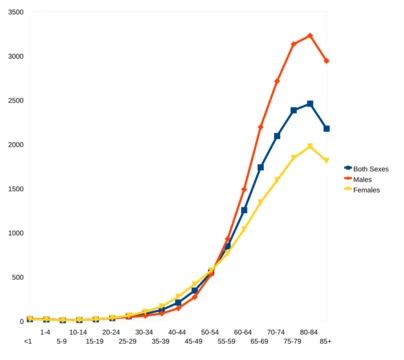
Hashimoto's thyroiditis
Autoimmune disease causing gradual thyroid destruction and hypothyroidism.

Hashimoto’s thyroiditis is an autoimmune condition where the body’s immune system gradually destroys the thyroid gland. It was first identified in 1912 by Japanese doctor Hakaru Hashimoto, and researchers confirmed it as an autoimmune disorder in 1956. In developed nations, it is the leading cause of hypothyroidism, and it usually first appears between ages 30 and 50.
In the early stages, people may not notice any symptoms, or they might have normal thyroid hormone levels and a small or absent goiter. Over time, the thyroid can enlarge into a painless goiter due to lymphocytic infiltration and fibrosis. Most people eventually develop hypothyroidism, which brings weight gain, fatigue, constipation, hair loss, and general aches. After many years, the thyroid often shrinks as it gets destroyed. Some patients in the early phase may briefly experience hyperthyroid symptoms—called destructive thyrotoxicosis—when thyroid hormones are released during intermittent gland destruction. In everyday language, a sudden worsening of symptoms, whether hyperthyroid or hypothyroid, is called a “flare.”
Even when thyroid hormone levels are normal, people with Hashimoto’s may still have a lower quality of life and report issues like abdominal bloating, constipation or diarrhea, feeling cold, weight gain, facial puffiness, forgetfulness, anxiety, depression, fatigue, insomnia, irritability, indifference, dry skin, itching, and hair loss. More serious complications of long-term hypothyroidism include high cholesterol, heart disease, heart failure, high blood pressure, myxedema (which can lead to coma, a medical emergency), pericardial effusion, pleural effusion, and problems during pregnancy. A rare but serious complication is thyroid lymphoma.
The disease is thought to arise from a mix of genetic and environmental factors. About 80% of the risk comes from genetics, and 20% from environmental triggers like iodine, drugs, infections, stress, and radiation. Having a family history of Hashimoto’s or another autoimmune disease raises the risk. Studies on identical twins show a 38–55% chance of both developing the condition, and up to 80% share thyroid antibodies even without symptoms—much higher than in fraternal twins, pointing to a strong genetic link. The specific genes involved vary by ethnic group, and their impact differs widely. People with chromosomal disorders such as Turn
- first_described_by
- Hakaru Hashimoto
- year_described
- 1912
- autoimmune_disorder_discovered
- 1956
- global_prevalence
- 1–2%
- prevalence_in_females
- approximately 5–10%
- prevalence_in_males
- approximately 1–2%
- most_common_cause_of
- hypothyroidism in developed countries
Lore & Background
Hashimoto's thyroiditis is thought to develop due to a combination of genetic and environmental factors. Risk factors include a family history of the condition and having another autoimmune disease. Diagnosis is confirmed with blood tests for TSH, thyroxine (T4), antithyroid autoantibodies, and ultrasound. Other conditions that can produce similar symptoms include Graves' disease and nontoxic nodular goiter.
Reader's Guide
Hashimoto's thyroiditis is significant as the most common cause of hypothyroidism in developed countries, with a global prevalence of 7.5%. It varies greatly by region, with the highest rate in Africa and the lowest in Asia. In the US, white people are affected more often than black people, and it is more common in low- to middle-income groups. Females are more susceptible, with a 17.5% rate of prevalence compared to 6% in males. The disease typically begins between the ages of 30 and 50, and rates have increased. Early on, symptoms may not be noticed, but over time most people develop hypothyroidism with weight gain, fatigue, constipation, hair loss, and general pain. Potential complications include thyroid lymphoma, high cholesterol, heart disease, heart failure, high blood pressure, myxedema, and problems in pregnancy. Treatment with levothyroxine is typically given only if hypothyroidism or a goiter is present. Those affected should avoid large amounts of iodine, though sufficient iodine is required especially during pregnancy. Surgery is rarely required. The disease was first described by Hakaru Hashimoto in 1912, and its autoimmune nature was discovered in 1956.
Did You Know?
- Hashimoto's thyroiditis has a global prevalence of about 1–2%, with females affected 5 to 10 times more often than males.
- It was first described by Japanese physician Hakaru Hashimoto in 1912.
- Studies in 1956 confirmed it as an autoimmune disorder.
- Regional prevalence data vary widely and are not consistently reported for specific continents.
Frequently Asked Questions
Who is Hashimoto's thyroiditis?
It is a chronic autoimmune condition first identified in 1912 by Japanese physician Hakaru Hashimoto, and its autoimmune nature was formally confirmed by researchers in 1956. Rather than a single event, it is a prolonged process in which the body's own immune system progressively attacks the thyroid gland.
What is Hashimoto's thyroiditis's power or role?
Its defining ability is the slow, progressive destruction of thyroid tissue through lymphocytic infiltration, which eventually tips the patient into hypothyroidism. In developed countries it stands as the single leading cause of that condition.
When does Hashimoto's thyroiditis usually enter the story?
It most commonly first manifests between the ages of 30 and 50, and it shows a strong gender bias, affecting roughly 5–10 % of women compared with about 1–2 % of men. Globally, around 1–2 % of the population is affected.
How does Hashimoto's thyroiditis's arc unfold?
In its early chapter the condition is often silent, with normal hormone readings and little or no visible goiter. As the plot advances, the gland swells into a painless goiter as immune cells steadily infiltrate and damage thyroid tissue.
Why is Hashimoto's thyroiditis important in the canon of aging-associated diseases?
Because it is the most common cause of hypothyroidism in developed nations, it shapes the diagnostic and treatment landscape for millions of middle-aged and older adults. Its slow autoimmune progression also makes it a key model for understanding how the immune system can turn against the body over decades.
More in Aging-associated diseases 1-24
Spotted an error? Know more?
This is a living reference — every entry is fact-audited, and reader corrections feed straight into our audit queue. Suggest an edit · See this site's audit record