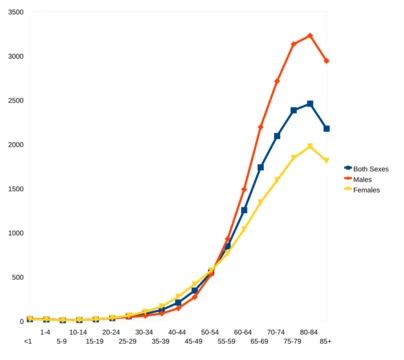
Collagen loss
Gradual decrease of collagen levels in the body.

Vincesherman · CC BY-SA 4.0
Collagen loss refers to the body's diminishing supply of its primary structural protein. This protein is the key building block in connective tissues like skin, bones, and tendons, giving them their strength and flexibility. While a natural part of getting older, this decline can be accelerated by external factors, including ultraviolet radiation, smoking, and a high-sugar diet.
The effects are most noticeable in the skin, which loses its elasticity, becomes thinner, and develops wrinkles and sagging. This also leaves the skin more fragile and prone to injury. Because collagen is found throughout the body, its loss contributes to a range of other issues: joint pain, weaker hair and nails, lower bone density, digestive problems, and a decrease in muscle mass. Various treatments aim to counteract collagen loss, though their effectiveness and scientific backing vary widely.
- field
- Biochemistry and dermatology
- known_for
- Gradual decrease of collagen levels in the body, causing visible skin aging and contributing to numerous disorders
- causes
- Aging, ultraviolet light, tobacco, excessive sugar intake
- effects
- Loss of skin elasticity, wrinkles, joint pain, reduced bone density, gastrointestinal issues
Lore & Background
Collagen loss is highly visible in the skin where it can cause the skin to lose elasticity, reduction of the thickness of the epidermis, an increase in the formation of wrinkles and sagging, and also make the skin vulnerable and easily damaged. Prevalent throughout the body, loss of collagen can also contribute to numerous other disorders such as joint pain, weakened hair and nails, reduced bone density, gastrointestinal issues, and reduced muscle mass.
Reader's Guide
Collagen loss is a significant biological process because collagen is the main structural protein in the extracellular matrix, making up one-third of the proteins in the human body. It provides strength and elasticity to connective tissues including skin, bones, tendons, and ligaments. The loss of collagen contributes to visible signs of aging and various health disorders. Environmental factors such as ultraviolet light, tobacco use, and excessive sugar intake can accelerate collagen loss. Interventions exist to address collagen loss with varying levels of efficacy and evidentiary support, including dietary changes, sunscreen application, and intake of vitamins C and A. Understanding collagen loss is important for developing strategies to mitigate its effects on skin aging and overall health.
Did You Know?
- Collagen is a rigid, non-soluble, fibrous protein that adds up to one-third of the proteins in the human body.
- Excess sugar consumption results in glycation that produces AGEs, which stick to collagen molecules and turn them stiff.
- Tobacco use can cause blood vessels to constrict and reduce blood flow, leading to perioral collagen damage.
- Only 3% of skin aging is caused by hereditary genetic influences, while external factors cause a large portion.
The Architecture of Collagen
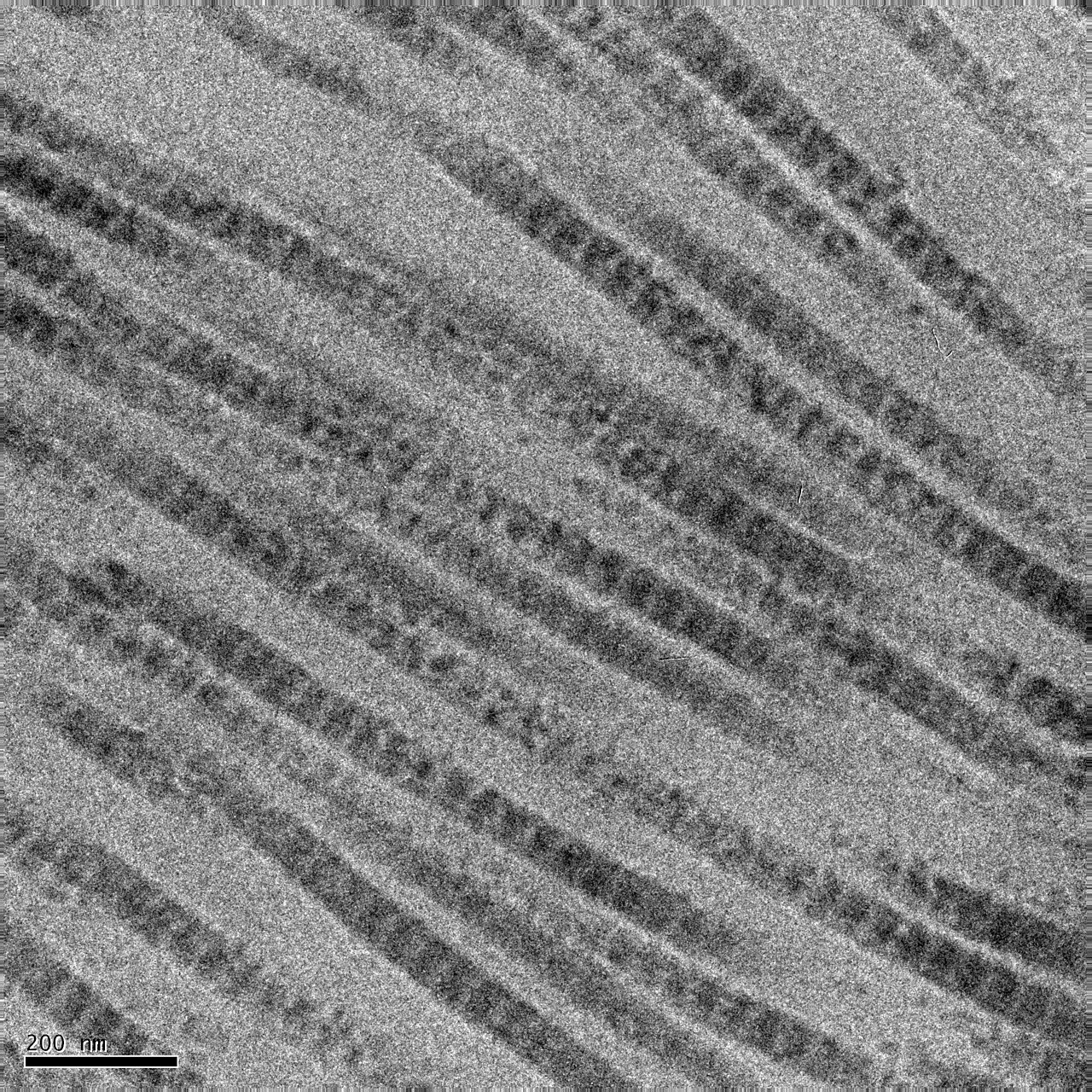
Collagen stands as the dominant structural protein woven throughout the body's connective tissues, accounting for roughly one-third of all protein in a human. Unlike many other proteins, it is rigid, non-soluble, and fibrous, with its molecules packed into long, thin fibrils that interlock to give skin, tendons, muscles, bones, and ligaments their characteristic strength and suppleness. Three principal types—1, 2, and 3—carry out distinct structural duties, while the protein's amino acid composition underpins the renewal of skin cells and the replacement of damaged or dead tissue. Beyond the skin, collagen scaffolding is essential for bone, tendon, and cartilage formation, a process that depends on the degree of mineralization those tissues achieve. In short, collagen is not merely a cosmetic concern; it is the tensile backbone that holds the body's entire framework together.
The Visible and Systemic Toll
When collagen levels decline, the consequences ripple far beyond the surface. In the skin, the most immediately noticeable changes include a measurable loss of elasticity, a thinning of the epidermal layer, and a marked increase in wrinkle formation and tissue sagging. The skin also becomes more fragile and prone to damage. Yet the damage does not stop at the surface. Because collagen is distributed throughout the body's connective tissues, its depletion contributes to a constellation of downstream problems: persistent joint pain, weakened hair and brittle nails, diminished bone density, gastrointestinal disturbances, and a gradual reduction in muscle mass. The breadth of these effects underscores that collagen loss is not a single-organ issue but a whole-body structural event. Numerous interventions have been proposed to counteract this decline, though the degree of scientific evidence supporting any given treatment varies considerably.
Molecular Drivers of the Decline
Research into skin aging has produced several competing and complementary molecular models. Oxidative stress—arising when reactive oxygen species outpace the body's detoxification capacity—impacts dermal tissue both inside and outside cells, with ROS generated in mitochondria, the endoplasmic reticulum, and peroxisomes. Ultraviolet radiation inflicts direct DNA damage, altering nucleotide structure and, if the nucleotide excision repair pathway is deficient, accelerating premature aging. Telomeres, the repetitive G-rich caps that shield chromosome ends, shorten with each cell division; without sufficient telomerase to replenish them, tissue regeneration falters and epidermal cell production is suppressed. A phenomenon termed inflammaging describes a chronic, low-grade, sterile inflammation that builds with age and is triggered in skin by UV-driven epidermal cell damage. Crucially, hereditary genetics account for only about three percent of skin aging, meaning the overwhelming share is driven by external and molecular factors.
Lifestyle Triggers and the Aging Cascade
While collagen loss is an inevitable part of growing older, several modifiable habits accelerate the process. Prolonged ultraviolet exposure, tobacco use, and excessive sugar intake are the three environmental culprits most consistently cited. Sugar, in particular, triggers glycation—a chemical reaction that generates advanced glycation end-products which directly damage collagen fibers. The natural aging cascade compounds these effects: the outermost skin layer thins even though the number of cell layers stays the same, pigment-bearing cells decrease in number while the melanocytes that remain grow larger, giving aged skin its thin, pale, translucent appearance. Blood vessels in the outer skin grow more delicate, raising the risk of bruising. Subcutaneous oil production drops—men typically notice this after age eighty, women gradually after menopause—and the fat layer beneath the skin thins, reducing insulation and padding. Sweat glands also produce less, making thermoregulation harder. Together, these shifts leave the body's structural and protective systems progressively compromised.
Gallery
Frequently Asked Questions
Who is Collagen loss?
Collagen loss is the body's steady reduction of its main structural protein, the one that gives skin, bones, tendons, and other connective tissues their strength and flexibility. It is a natural part of the aging timeline but can be pushed along by outside factors.
What are Collagen loss's powers/role?
Its primary effect is stripping away the elasticity and thickness of the skin, producing wrinkles, sagging, and a more fragile surface. It also weakens joints, lowers bone density, and can contribute to digestive problems.
How does Collagen loss's story end?
There is no clean ending—collagen production simply keeps declining with age, and the structural damage it causes is largely cumulative. While certain habits can slow the pace, the body never fully restores its youthful collagen levels.
Why is Collagen loss important?
Because collagen serves as the scaffolding for so many tissues, its gradual disappearance ripples across the skin, musculoskeletal system, and even the gut. Understanding it helps explain why aging doesn't just affect one area but the whole body at once.
What accelerates Collagen loss?
Beyond the natural clock, ultraviolet radiation, tobacco use, and consistently high sugar intake are the main external accelerants. Reducing exposure to these factors can help slow the rate of decline.
More in Aging-associated diseases 1-24
Spotted an error? Know more?
This is a living reference — every entry is fact-audited, and reader corrections feed straight into our audit queue. Suggest an edit · See this site's audit record