Type 2 diabetes
A chronic metabolic disease marked by insulin resistance and high blood sugar.

Authors of the study: GBD 2021 Diabetes Collaborators · CC BY 4.0
Type 2 diabetes (T2D), formerly known as adult-onset diabetes, is a form of diabetes mellitus characterized by high blood sugar, insulin resistance, and relative lack of insulin. It primarily occurs as a result of obesity and lack of exercise, though genetic factors also contribute. Type 2 diabetes makes up about 90% of diabetes cases and is associated with a ten-year-shorter life expectancy.
- field
- Medicine
- known_for
- Chronic metabolic disorder involving insulin resistance and high blood sugar
- affected_population
- Approximately 392 million diagnosed worldwide as of 2015
- risk_factors
- Obesity, lack of exercise, genetic predisposition, increasing age
- common_treatments
- Exercise, dietary changes, metformin, insulin injections, bariatric surgery
Lore & Background
Type 2 diabetes has been recognized since ancient times, with diabetes first described in an Egyptian manuscript from c. 1500 BCE. However, the distinction between type 1 and type 2 diabetes was not clearly made until the 20th century. The importance of insulin in the disease was determined in the 1920s. Rates of type 2 diabetes have increased markedly since 1960 in parallel with obesity, rising from about 30 million cases in 1985 to approximately 392 million in 2015.
Reader's Guide
Type 2 diabetes is a significant global health concern due to its high prevalence and serious complications. It is largely preventable through maintaining a normal weight, regular exercise, and a healthy diet low in sugar and saturated fat. Long-term complications include heart disease, stroke, diabetic retinopathy (which can lead to blindness), kidney failure, and lower limb amputations. The disease is associated with a ten-year-shorter life expectancy and is the largest cause of nontraumatic blindness and kidney failure in the developed world. Treatment typically involves lifestyle changes and medication, with metformin commonly recommended; many people eventually require insulin injections. Bariatric surgery often improves diabetes in obese individuals. The disease's strong link to lifestyle factors makes public health interventions crucial for reducing its impact.
Did You Know?
- Type 2 diabetes makes up about 90% of all diabetes cases.
- Rates of type 2 diabetes increased from about 30 million in 1985 to approximately 392 million in 2015.
- Diabetes was first described in an Egyptian manuscript from c. 1500 BCE.
- Type 2 diabetes is associated with a ten-year-shorter life expectancy.
Classification as an Aging-Associated Condition
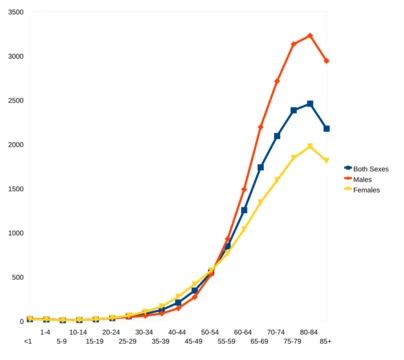
Type 2 diabetes is classified among the aging-associated diseases, a group that also includes atherosclerosis, cancer, arthritis, cataracts, osteoporosis, hypertension, and Alzheimer's disease. This label carries precise meaning. It does not describe a condition locked to a particular age bracket the way chicken pox or measles are childhood diseases, nor does it describe an accelerated-aging genetic disorder. Instead, Type 2 diabetes is understood as a complication that emerges from the biological process of senescence itself. Every adult organism ages, yet not every adult organism develops every aging-associated condition, which is what separates these diseases from the aging process per se. A defining epidemiological hallmark is that the incidence of Type 2 diabetes, like its fellow aging-associated conditions, rises exponentially as age increases. This exponential trajectory is what places it squarely in the aging-associated category rather than any other disease grouping, and it means the risk compounds dramatically across a lifetime rather than remaining a flat, constant threat.
Global Mortality Landscape
Type 2 diabetes occupies a position within a broader category of conditions that collectively account for the overwhelming majority of human death. Of the approximately 150,000 people who die each day worldwide, roughly two-thirds—around 100,000—succumb to age-related causes. In industrialized nations, this proportion climbs even higher, reaching 90 percent of all deaths. Type 2 diabetes sits alongside atherosclerosis, cardiovascular disease, cancer, arthritis, cataracts, osteoporosis, hypertension, and Alzheimer's disease as one of the conditions driving this staggering mortality figure. Because the incidence of each of these diseases increases exponentially with advancing age, they do not merely add a steady risk but compound dramatically over a lifetime. Understanding Type 2 diabetes in isolation therefore misses the larger picture: it is one thread in a web of senescence-linked conditions that together represent the dominant cause of death across the globe, particularly in wealthier, longer-lived populations where the proportion of age-related mortality is highest.
Genetic and Species-Specific Vulnerability
Susceptibility to Type 2 diabetes is far from uniform across organisms or genetic backgrounds. While every adult animal ages, not every adult animal develops every aging-associated disease, and the specific constellation of conditions that emerges varies by species. Humans, dogs, and rabbits can develop Alzheimer's disease, but rodents cannot; elderly rodents typically succumb to cancer or kidney disease rather than cardiovascular conditions. Within humans, genetic syndromes reveal strikingly different disease profiles. Individuals with Down syndrome are susceptible to Type 2 diabetes and Alzheimer's disease, yet they do not typically develop high blood pressure, osteoporosis, or cataracts. By contrast, those with Werner's syndrome face osteoporosis, cataracts, and cardiovascular disease but are spared neurodegeneration. These patterns underscore a core principle: genetics determines which aging-associated diseases an individual or species is vulnerable to, and Type 2 diabetes is one of the conditions whose presence or absence is shaped by this underlying genetic architecture.
Research Frontiers: DNA Damage and the SENS Agenda
Research into Type 2 diabetes and its fellow aging-associated conditions is increasingly framed through the lens of DNA damage and repair. DNA damage has emerged as a major contributor to cancer and numerous other diseases linked to aging, with the specific outcome depending on the type, amount, and location of the damage, the cell type affected, its stage in the cell cycle, and the repair mechanisms available to respond. Some researchers propose that aging-related diseases, including Type 2 diabetes, are mediated by vicious cycles that amplify damage over time. The SENS programme represents an ambitious strategy aimed at repairing the root causes of age-related illness and developing periodic medical interventions to restore a youth-like state indefinitely. SENS has identified seven categories of aging-related damage and outlined feasible solutions for each. However, critics contend that the aging process is too complex and insufficiently understood for SENS to be scientifically viable in the foreseeable future, casting doubt on whether Type 2 diabetes and similar conditions can be systematically eliminated through such an approach.
Gallery


Frequently Asked Questions
Who is Type 2 diabetes?
Type 2 diabetes is a chronic metabolic condition in which the body's cells become resistant to insulin, causing blood glucose levels to climb to dangerous heights. It was once called adult-onset diabetes because it typically emerges later in life, though genetic predisposition and lifestyle choices like poor diet and inactivity are major drivers of its development.
What are Type 2 diabetes's powers/role?
Its central 'ability' is to disrupt glucose regulation by rendering insulin ineffective, leading to persistently elevated blood sugar over time. This metabolic sabotage can progressively damage blood vessels, nerves, and organs, making it a key antagonist in the stories of cardiovascular disease, kidney failure, and vision loss.
How does Type 2 diabetes's story end?
There is no single ending—many people manage the condition for decades through dietary changes, regular exercise, medications such as metformin, or insulin therapy, while others may eventually need bariatric surgery. Without intervention, it tends to shorten life expectancy by roughly a decade and can culminate in severe complications like amputation or multi-organ failure.
Why is Type 2 diabetes important?
It accounts for roughly 90% of all diagnosed diabetes cases worldwide, affecting approximately 392 million people as of 2015, which makes it one of the most widespread chronic conditions in modern medicine. Its strong links to obesity, sedentary lifestyles, and advancing age mean it shapes public-health policy, nutrition science, and preventive care on a global scale.
Who are Type 2 diabetes's nemesis/weaknesses?
Its greatest 'weaknesses' are consistent physical activity, a balanced diet low in refined sugars, and maintaining a healthy body weight, all of which can delay or even reverse early-stage insulin resistance. Medical countermeasures like metformin, GLP-1 receptor agonists, and insulin injections also serve as powerful tools that keep the condition in check.
More in Aging-associated diseases 1-24
Spotted an error? Know more?
This is a living reference — every entry is fact-audited, and reader corrections feed straight into our audit queue. Suggest an edit · See this site's audit record