Chronic lymphocytic leukemia
A slow- or fast-growing leukemia of B-cell lymphocytes.

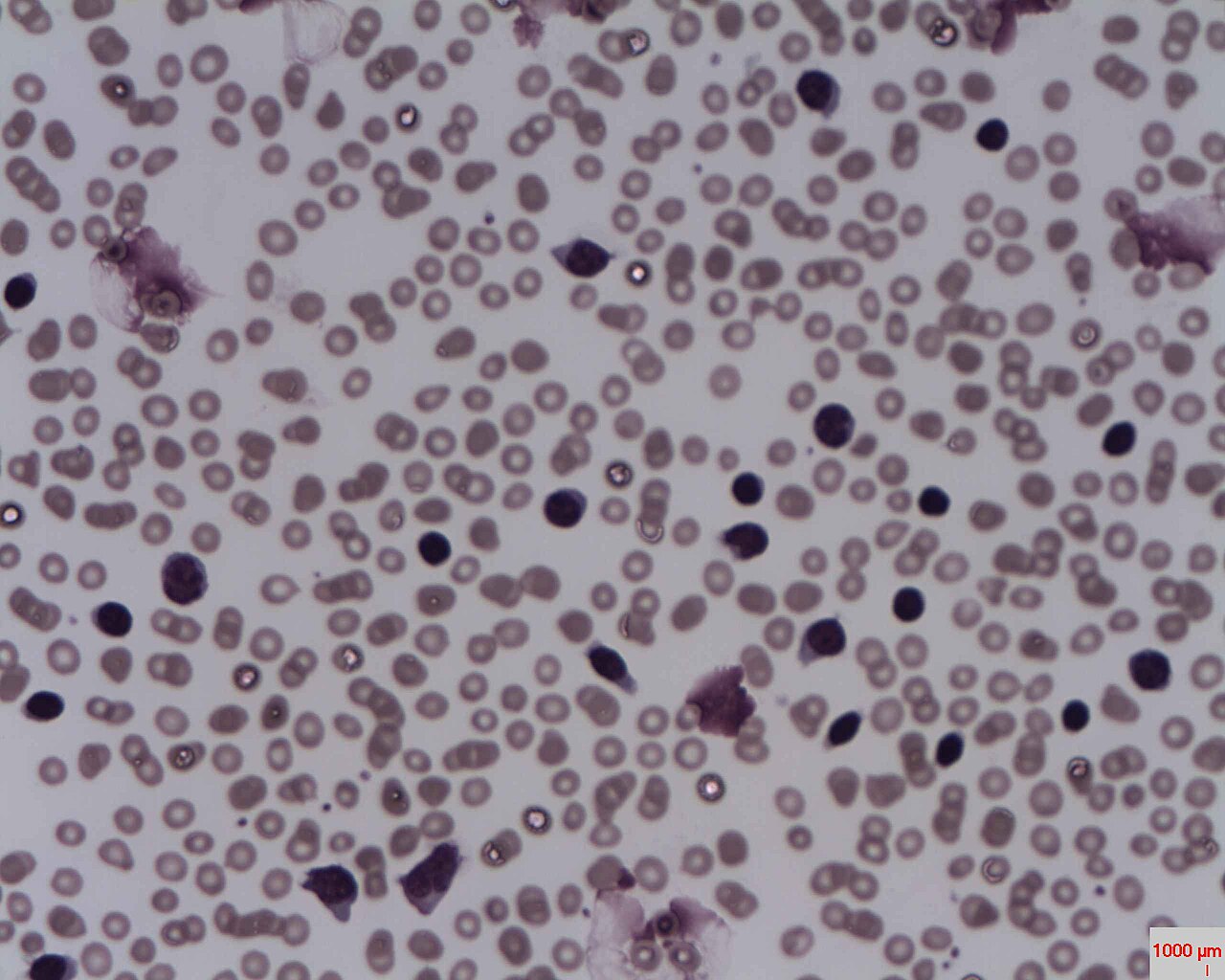
Erhabor Osaro (Associate Professor) · CC BY-SA 3.0
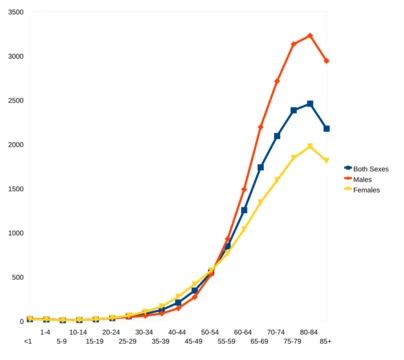
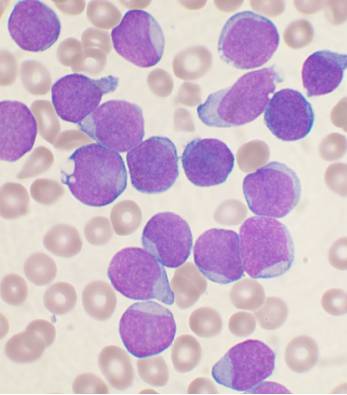
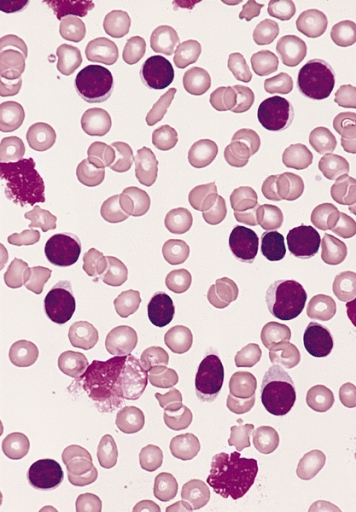
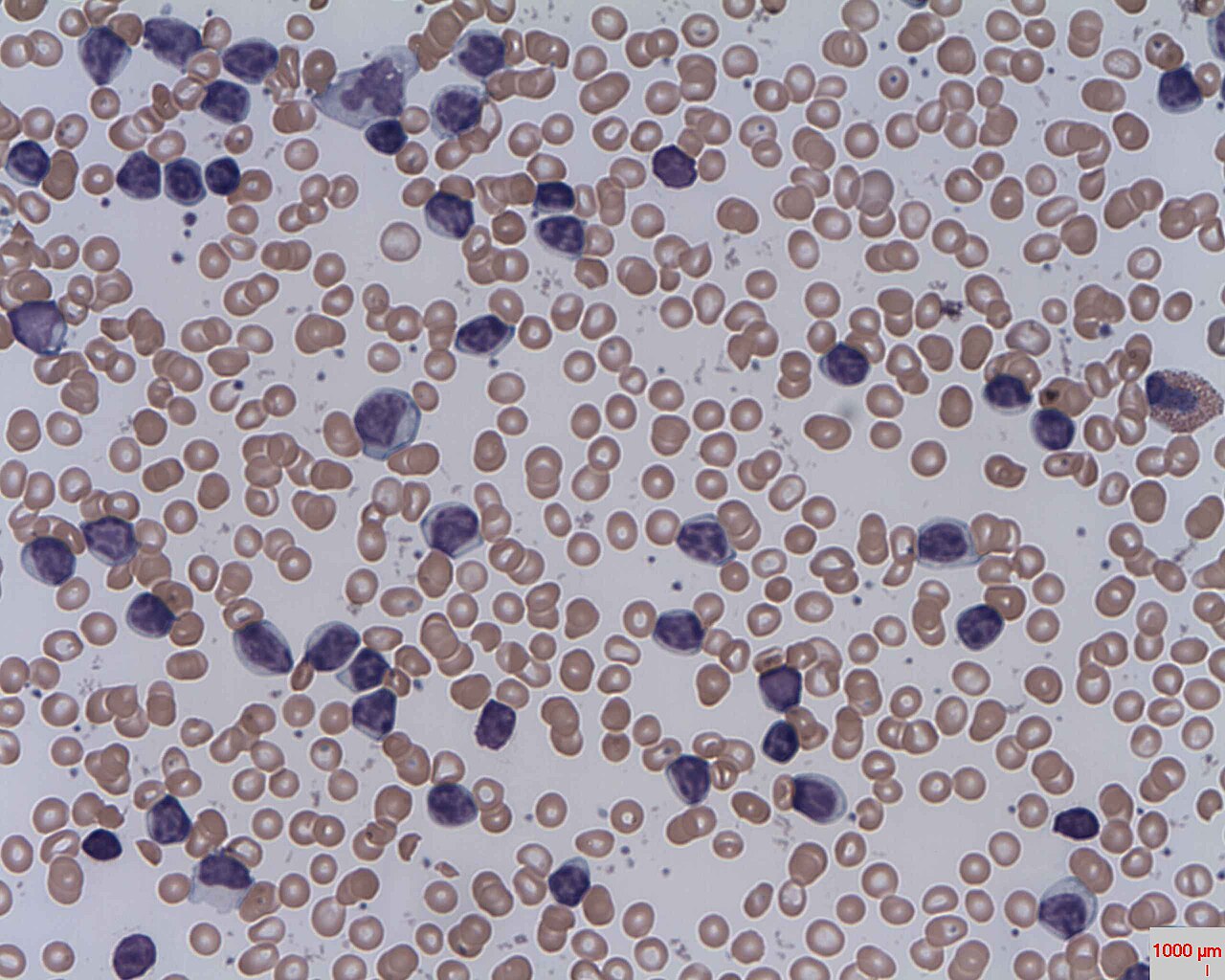
Chronic lymphocytic leukemia (CLL) is a type of cancer that affects the blood and bone marrow, characterized by the overproduction of malfunctioning B-cell lymphocytes. It is the most common leukemia in the Western world, typically affecting individuals over age 65, and is often asymptomatic at diagnosis.
- type
- Cancer
- most_common_in
- Western world
- typical_age_at_diagnosis
- Over 65 years
- gender_predominance
- Men more commonly affected than women
- average_lifetime_risk
- 0.5–1% for both genders
- fraction_of_cancer_deaths_1980_2015
- Less than 1%
Lore & Background
CLL results from the accumulation of genetic mutations in a single hematopoietic stem cell, leading to an abnormal expansion of white blood cells. Common mutations include NOTCH1, TP53, ATM, and SF3B1. The disease is often preceded by a pre-cancerous state called monoclonal B-cell lymphocytosis (MBL), which may progress to CLL at a rate of about 1% per year in high-count cases. Epigenetic changes, such as DNA methylation patterns, also play a role.
Reader's Guide
CLL is significant as the most common leukemia in the Western world, yet it accounts for less than 1% of cancer deaths. Its management depends on whether the patient is asymptomatic—treated with watchful waiting—or symptomatic, requiring chemotherapy, immunotherapy, or both. Complications include hypogammaglobulinemia, autoimmune hemolytic anemia, and Richter's transformation, a conversion to aggressive lymphoma. Risk factors include family history, tobacco use, and exposure to Agent Orange, though the exact cause remains unknown. Diagnosis relies on blood tests showing high lymphocyte counts and smudge cells, confirmed by flow cytometry.
Did You Know?
- Most individuals have no symptoms when first diagnosed with CLL.
- Around 5–10% of patients may experience fever, fatigue, weight loss, or enlarged lymph nodes.
- CLL is rarely seen in individuals younger than 40 years old.
- Richter's transformation occurs in 2–10% of CLL patients, converting the disease to a more aggressive lymphoma.
The Silent Onset and Clinical Presentation
Most individuals with chronic lymphocytic leukemia are identified not through alarming symptoms but through an incidental finding on a routine blood test that reveals an abnormally elevated white blood cell count, particularly a marked increase in circulating lymphocytes. In the majority of cases, patients feel entirely well at the time of diagnosis, making CLL one of the more insidious hematologic malignancies. Only about five to ten percent of newly diagnosed patients report early warning signs such as persistent fever, unusual fatigue, unexplained weight loss, diminished appetite, painless swelling in the neck, armpit, or groin lymph nodes, or a noticeably enlarged spleen. In rarer presentations, the malignant cells overwhelm the bone marrow to such a degree that red blood cell, neutrophil, and platelet counts plummet, producing easy bruising, night sweats, and profound tiredness. When symptoms do appear, they tend to progress gradually rather than striking all at once, and the overall risk of serious infections rises as the immune system becomes increasingly compromised.
The Genetic and Epigenetic Architecture of the Disease
At its origin, CLL typically begins with a single hematopoietic stem cell that, over a span of years, accumulates a particular combination of genetic mutations enabling it to proliferate faster than surrounding cells. The specific set of mutations varies from patient to patient, which is one reason the disease resists a one-size-fits-all therapeutic approach. Among the most frequently identified alterations are mutations in NOTCH1, TP53, ATM, and SF3B1. Beyond these sequence-level changes, CLL is also shaped by epigenetic modifications—chemical tags added to DNA that regulate transcription without changing the underlying code. These epigenetic patterns can be grouped into naïve B-cell-like, memory B-cell-like, and intermediate subtypes. Because no single mutation is present in every case, susceptibility may depend on the co-inheritance of multiple risk-associated variants. The exact trigger remains unknown, though family history, tobacco use, Agent Orange exposure, certain insecticides, and possibly hepatitis C virus have all been linked to elevated risk, while blood transfusions have been explicitly ruled out as a contributing factor.
Complications and the Threat of Transformation
One of the most consequential complications of CLL is hypogammaglobulinemia, in which antibody levels in the blood drop to very low levels. Approximately one quarter of patients already show this deficiency at the time of diagnosis, and additional patients develop it as the disease progresses, leaving them vulnerable to recurrent infections and autoimmune disturbances. Autoimmune hemolytic anemia, in which the body's own immune system destroys its red blood cells, affects roughly five to ten percent of CLL patients, while immune thrombocytopenia represents another autoimmune risk. Far more ominous is Richter's transformation, which occurs in two to ten percent of cases. In this process, the original indolent CLL cells convert into a far more aggressive malignancy bearing the histopathology of diffuse large B-cell lymphoma or, less commonly, Hodgkin's lymphoma. Patients typically experience a sudden clinical collapse marked by unexplained fevers, rapid asymmetric lymph node growth, and sharp drops in blood cell counts. CLL has also been documented converting into other aggressive conditions, including lymphoblastic lymphoma, hairy cell leukemia, and acute myeloid leukemia.
Management Strategies and Epidemiological Profile
CLL stands as the most prevalent form of leukemia in the Western world, predominantly striking individuals over sixty-five as decades of accumulated genetic mutations create the conditions for malignant expansion. It is exceedingly rare in those under forty. While men are diagnosed more frequently, the average lifetime risk for both sexes hovers around zero point five to one percent, and the disease accounted for less than one percent of cancer-related deaths between 1980 and 2015. Clinically, the management philosophy reflects the disease's often indolent nature: asymptomatic patients are typically placed under watchful waiting with regular monitoring for infections, since no evidence supports the idea that early intervention changes the disease trajectory. When symptoms become significant, treatment escalates to chemotherapy, immunotherapy, or a combination of both, tailored to the patient's age, overall physical condition, and the presence or absence of high-risk genetic markers such as the del(17p) or TP53 mutations. This individualized approach acknowledges that CLL exists on a spectrum from slow-growing to fast-growing variants, and that the right strategy depends heavily on where a given patient falls along that spectrum.
Gallery
Frequently Asked Questions
Who is Chronic Lymphocytic Leukemia?
CLL is a blood and bone marrow cancer in which the body churns out an excess of defective B-cell lymphocytes that crowd out healthy cells. It holds the title of the most frequently diagnosed leukemia across Western countries.
What are CLL's powers or role in the story?
Its primary ability is a gradual or occasionally rapid buildup of non-functional B cells that disrupt normal immune function. A notable trait is that it frequently presents with no symptoms whatsoever when first detected, making it a stealthy antagonist.
Who does CLL typically target?
The disease overwhelmingly strikes individuals past the age of sixty-five and shows a slight preference for men over women. Its average lifetime risk hovers around 0.5 to 1 percent for either sex.
How does CLL's story end?
Because it is generally a slow-progressing leukemia, many patients live for years or even decades without needing aggressive intervention. Between 1980 and 2015 it accounted for less than one percent of all cancer-related deaths.
Why is CLL important in the aging-disease canon?
As the single most common form of leukemia in the Western world, it serves as a central example of how the immune system's B-cell compartment can go haywire with advancing age. Its indolent course makes it a key case study in the monitoring-versus-treating debate for age-related malignancies.
More in Aging-associated diseases 1-24
Spotted an error? Know more?
This is a living reference — every entry is fact-audited, and reader corrections feed straight into our audit queue. Suggest an edit · See this site's audit record